Summer 2
Year 3 and 4 – Multifaith Creation
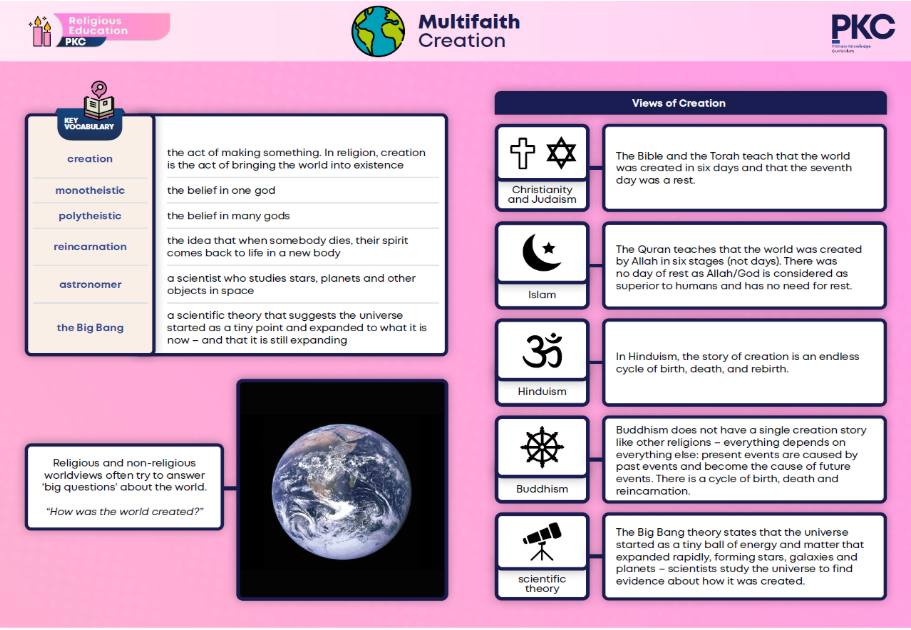
Key end points for this multifaith unit, Creation Stories, are:
- To know there are different views of creation.
- To know some religious views of creation, have a creator/creators, and some do not.
- To know there are alternative and non-religious views of creation such as the Big Bang Theory.
- There are some similarities and differences between views of creation.
This multifaith unit helps children understand that there are different perspectives on creation. They will explore:
- Religious views that include a creator
- Religious views that do not include a creator
- Non-religious world views on how the universe began.
Year 5 and 6
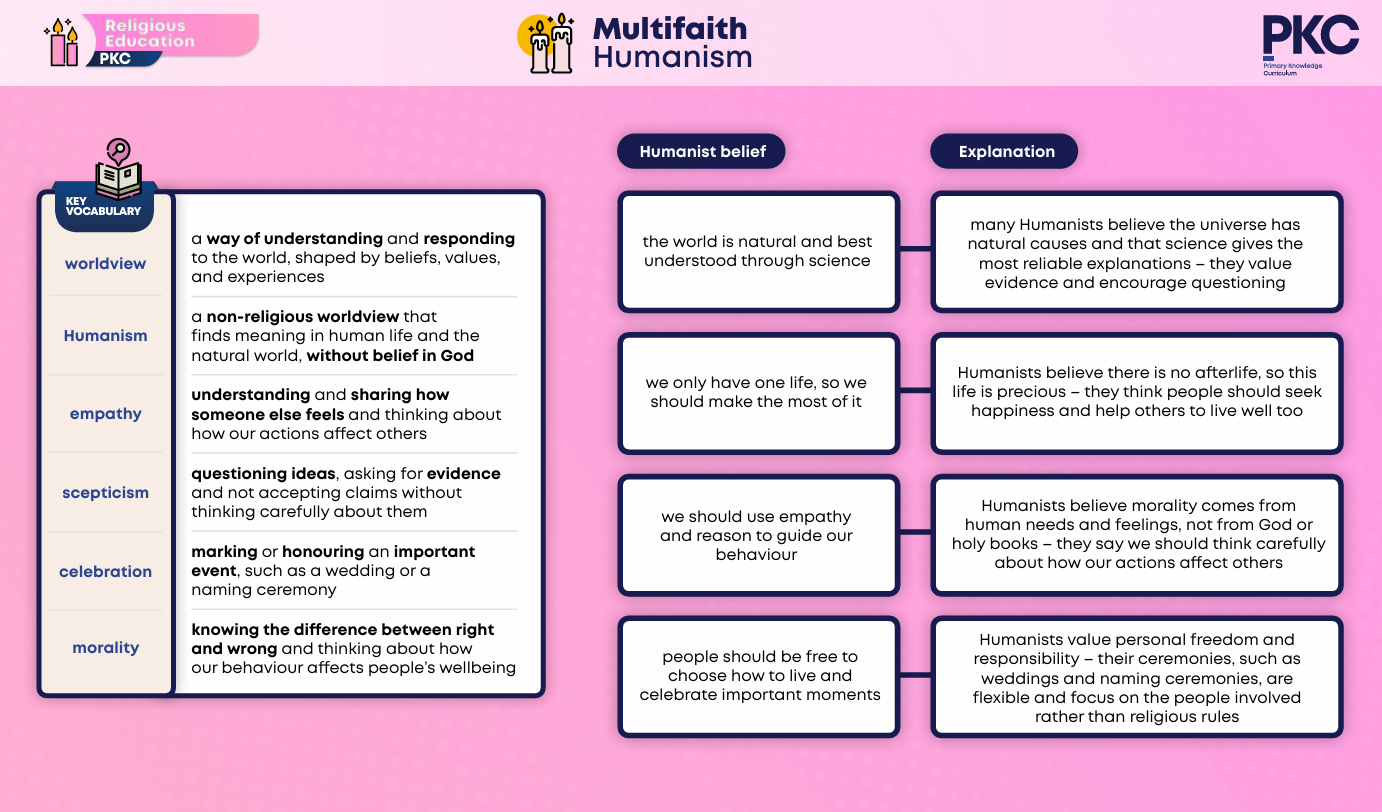
Key end points for this unit include:
- To know that: Humanism is a way of seeing the world in a non-religious way.
- Humanists believe the world is a natural place.
- Many Humanists celebrate marriage with a non-religious wedding.
- A humanist naming ceremony marks the arrival of a new child in a non-religious way.
- Many Humanists’ beliefs shape their behaviour.
This unit introduces pupils to Humanism, a non-religious world-view that emphasises reason, empathy, and responsibility. The unit is sequenced to help children gradually deepen their understanding: beginning with the foundations of Humanist belief, moving through how Humanists view the natural world, exploring how they celebrate life events, and finally examining how Humanist values shape behaviour. Throughout the PKC RE curriculum, Humanism is referred to as a non-religious world view so that children can understand that some people’s beliefs are formed without religion.